
Tattoo artistry is both an ancient craft and a modern form of self-expression, with drawing being the foundation of every great tattoo. For aspiring tattoo artists, learning how to draw tattoos is crucial, as tattoos are essentially permanent drawings on the skin. Whether you’re sketching on paper or transferring designs to the skin, strong drawing skills allow you to translate ideas into lasting, meaningful artwork.
In this article, we’ll explore essential drawing exercises and techniques that help improve your tattoo artistry. From mastering basic shapes to advanced shading and line work, these exercises will lay the groundwork for developing your unique style. If you’re particularly interested in mastering black and grey tattoos, you can explore more about this technique in other sections of the site.
The Basics of Tattoo Drawing

Drawing is the foundation of every tattoo, and understanding the fundamental elements is essential for any tattoo artist. Whether you’re working with traditional methods on paper or utilizing digital tools, mastering the basics of tattoo drawing is crucial for creating designs that will translate well onto the skin. In this section, we’ll break down the essential aspects of tattoo drawing, including the design elements, tools, and the vital role drawing plays in the tattooing process.
Understanding Tattoo Design Elements
At the core of every tattoo is a well-crafted design. Tattoo art involves several key design elements that every artist must understand to create balanced and visually appealing tattoos. The three primary design elements to focus on are line work, shading, and composition.
- Line Work: Line work is fundamental to any tattoo design. Strong, clean lines are the building blocks of a tattoo. Whether you’re creating geometric patterns, intricate details, or bold outlines, the precision of your lines will define the overall clarity and longevity of your tattoo. Mastering line work means understanding how different line thicknesses and types (smooth, dashed, or solid) can create contrast and depth.
- Shading: Shading is what gives a tattoo its depth, realism, and texture. Proper shading techniques help to create the illusion of light and shadow, making your tattoo design come to life. Whether it’s soft gradients for realism or heavy blackwork for a bolder look, shading defines the mood of a tattoo. Practice using different techniques, such as stippling, cross-hatching, and smooth gradients, to achieve the desired effect.
- Composition: Composition refers to the arrangement of elements within the design. A well-composed tattoo will have elements that flow naturally with the body’s shape and proportions. Whether your tattoo is large or small, understanding how to balance the placement and interaction of design elements is key to achieving visual harmony.
Importance of Symmetry and Proportion in Tattoo Art
Symmetry and proportion are critical in tattoo art, particularly when the tattoo is on a human body. Symmetry ensures that the design is balanced, while proportion determines how the design fits within the space it occupies. A tattoo can look distorted or out of place on the skin without proper proportion. You can see excellent examples of balanced and well-proportioned designs in the portrait tattoo collection.
- Symmetry: Some tattoos require perfect symmetry, such as mandalas, geometric patterns, or certain types of tribal tattoos. Symmetry brings balance and harmony, ensuring the design doesn’t appear off-center or skewed. However, asymmetry can also be effective, particularly in designs that convey movement or organic shapes. Knowing when to apply symmetry is key to creating tattoos that look purposeful and aligned.
- Proportion: When drawing a tattoo, always consider the body part where it will be placed. For example, a sleeve tattoo will have different proportions than a small ankle piece. Understanding how to scale your design in proportion to the size of the area will help the tattoo complement the body’s natural lines. It’s crucial to use reference points and practice drawing designs that fit within the context of the human body.
Tools Every Tattoo Artist Should Master

To successfully execute a tattoo design, you need to master the right tools. Both traditional and digital tools play important roles in the drawing process, and being proficient in both is essential for any tattoo artist.
- Pencils and Inks: Traditional tattoo artists often start with pencils for sketching out their designs on paper. Pencils allow for light, soft strokes and easy adjustments before committing to ink. Once you’ve solidified your design, you’ll use inks to finalize the lines. Fine liners, felt-tip pens, and brushes are commonly used to create the outlines and shading. Knowing how to use different types of pencils, from hard to soft, will help you adjust the shading and fine details during the drawing process.
- Digital Tools: In today’s digital age, many tattoo artists use graphic design software like Procreate, Photoshop, or Illustrator to create and refine their designs. Digital tools offer flexibility, allowing for quick adjustments and endless possibilities with colors, textures, and layer effects. Digital canvases also make it easier to experiment with placements on the body, ensuring your design flows with the client’s skin and shape.
- Drawing Paper or Digital Canvases: Whether you’re working on paper or digitally, the choice of surface is important for practice. For traditional work, choose high-quality paper that can handle ink and pencil work without bleeding or smudging. If you’re using digital tools, consider using a tablet with pressure sensitivity to mimic the feel of a traditional pencil or ink.
The Role of Drawing in Tattooing
Drawing serves as the blueprint for the tattoo. It’s the visual representation of the client’s ideas, transformed into a design that can be transferred to the skin. A well-drawn tattoo will guide the tattoo artist in executing the work accurately and efficiently.
- Planning and Execution: Drawing is vital in planning and executing tattoos, especially large, complex pieces. It allows you to test out design ideas, make adjustments, and visualize how the tattoo will fit on the body. The more detailed your drawing, the easier it will be to replicate the design on the skin. Drawing also enables you to address challenges like placement, size, and alignment before the tattoo machine ever touches the skin.
- Transition from Drawing to Skin: The process of moving from drawing to skin can be a challenge. Tattoos are permanent, and skin is a dynamic, living surface that behaves differently from paper or digital canvases. When transferring your drawing to the skin, you’ll need to consider the body’s curves, the type of skin, and how your lines will hold up over time. Many artists use transfer paper to help guide their designs, but a strong understanding of your drawing is essential for making on-the-fly adjustments during the tattooing process.
Drawing Exercises for Beginners
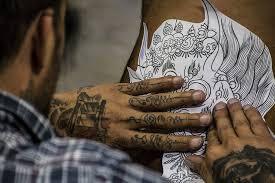
For aspiring tattoo artists, building a strong foundation through basic drawing exercises is essential. Mastering the fundamentals, such as shape, line, form, and proportion, will help you develop control and confidence in your designs. These early exercises may seem simple, but they lay the groundwork for more complex tattoo art and allow you to train your eye for balance, symmetry, and composition.
Start by practicing basic shapes—circles, squares, and triangles. These help you understand form and create the structure for more intricate illustrations. Shading these shapes helps you visualize depth and light direction. Next, work on your line work, focusing on straight lines, curved lines, and fine detailing. Smooth, clean lines are a critical skill in tattooing and require steady hand control and consistency. Finally, begin drawing simple objects in perspective to understand how scale, dimension, and proportion play a role in creating lifelike art. You can see how these foundational techniques evolve into advanced designs by exploring realistic tattoo styles at Marked Forever.
Key Beginner Drawing Exercises:
- Basic Shape Drawing
- Draw circles, squares, and triangles to build hand coordination.
- Practice shading to understand light direction and volume.
- Line Work Practice
- Create straight and curved lines with varying thickness.
- Focus on even pressure and smooth execution.
- Form and Proportion Exercises
- Sketch basic objects (cups, cubes, plants) in perspective.
- Study proportion and how to scale images for different body placements.
Intermediate Drawing Techniques
Once you’ve mastered the basics, it’s time to explore more advanced drawing exercises that focus on creating realism, complexity, and texture. At this stage, artists start to bring more depth and life into their work through detailed shading, intricate patterns, and enhanced visual storytelling. Understanding how light affects form is essential for adding dimension to your art, especially when adapting designs for the human body.
Begin by practicing different shading methods, such as cross-hatching, stippling, and smooth blending, to build depth. These techniques help simulate how light hits the skin and bring realism to the artwork. From there, challenge yourself with complex patterns—mandalas, floral arrangements, and tribal motifs require precision, balance, and rhythm. Incorporating these into your practice boosts your ability to design compelling, balanced tattoos. Lastly, explore texture drawing to simulate surfaces like skin, fabric, and hair. This enhances realism and helps prepare you for more detailed custom pieces.
Key Intermediate Drawing Techniques:
- Creating Depth and Dimension
- Practice shading techniques like cross-hatching, stippling, and smooth gradients.
- Study how different light sources impact shadows and depth.
- Complex Patterns and Designs
- Draw mandalas, floral arrangements, and tribal patterns.
- Focus on repetition, balance, and symmetry.
- Building Texture in Tattoo Art
- Learn to simulate skin, fabric, hair, and natural elements.
- Use contrast and fine details to add realism.
Advanced Drawing Techniques
At the advanced stage, tattoo artists refine their skills by focusing on lifelike portraits, abstract concepts, and the effective use of color. Drawing faces and capturing expressions demand a solid understanding of facial proportions, symmetry, and the subtle details that make a portrait feel real. This level of drawing helps artists offer custom, highly personalized tattoos that go beyond standard flash designs.
In addition to realistic portraits, artists can experiment with abstract or mixed-style designs. Combining various elements—like geometric patterns with realism or traditional with illustrative styles—adds uniqueness to their work. Color also becomes more important at this stage. Understanding color theory, contrast, and skin tone compatibility is key to designing tattoos that heal well and remain vibrant over time. These skills not only elevate your artwork but also prepare you for more complex client requests.
Key Advanced Drawing Techniques:
- Drawing Faces and Portraits
- Study facial proportions, symmetry, and anatomy.
- Practice capturing emotion and personality through expression.
- Custom and Abstract Tattoo Design
- Experiment with combining different tattoo styles and techniques.
- Develop a personal design language that feels unique and artistic.
- Working with Colors in Tattoo Art
- Learn color theory, blending, and skin tone compatibility.
- Practice layering and saturation techniques for vibrant designs.
Practical Drawing Exercises for Tattoo Artists
Putting theory into practice is essential for tattoo artists who want to evolve and refine their craft. Beyond technical skills, practical exercises help you build consistency, develop a unique style, and stay creatively engaged. One of the most effective ways to grow is by establishing a daily drawing routine. Even dedicating 15–30 minutes a day to sketching can drastically improve your control, speed, and confidence.
Drawing from life—such as real objects, people, or outdoor scenes—sharpens your observation skills and helps you better understand form and movement. Reference photos can also be a great source of inspiration for tattoo concepts. Another valuable exercise is creating tattoo flash art. These pre-designed sheets are not only great for building a portfolio but also help you explore recurring motifs and develop a recognizable artistic identity. Practicing flash encourages clean line work, quick ideation, and visual storytelling.
Key Practical Drawing Exercises:
- Daily Drawing Routines
- Sketch every day to strengthen muscle memory and refine technique.
- Experiment with different subjects and styles to stay inspired.
- Sketching from Life and Reference Photos
- Draw real-life objects, anatomy, or scenery to improve realism.
- Use reference images to study poses, lighting, and textures.
- Creating Tattoo Flash Art
- Design themed flash sheets (e.g., nautical, floral, skulls).
- Focus on clean lines, bold shapes, and cohesive sets to build your portfolio.
How to Transition Your Drawings to Tattoos
Turning your drawings into actual tattoos requires an understanding of how artwork translates onto the human body. Unlike paper, skin is flexible, textured, and varies greatly from person to person. Tattoo artists must learn how to adapt their designs to fit different body parts while maintaining clarity, flow, and proportion. This means simplifying complex drawings if needed and considering how the design will look as the body moves.
One of the most important tools in this transition is the stencil. Artists use stencils to accurately transfer line work from paper (or a digital tablet) to the skin. It’s also common to adjust the design slightly to suit the client’s body shape or tattoo placement. Finally, before working on real skin, many artists practice on synthetic skin or fruit (like oranges or pigskin) to simulate the tattooing process. This step helps bridge the gap between drawing and machine work, ensuring smooth lines and consistent shading when it’s time to ink.
Key Steps for Transitioning Drawings to Tattoos:
- Understanding the Skin as a Canvas
- Recognize the differences between flat surfaces and curved human anatomy.
- Adjust the design flow to suit placement and movement on the body.
- Tattoo Stencils and Design Adjustments
- Use stencil paper to transfer outlines from drawings to skin.
- Simplify or modify designs for size, detail, and placement.
- From Sketch to Ink: The Tattooing Process
- Practice tattooing on synthetic skin or fruit to build machine control.
- Translate your drawing with precision using lining, shading, and coloring techniques.
Overcoming Common Challenges in Tattoo Drawing
Tattoo drawing presents several challenges that every artist must overcome to refine their craft. One of the most common hurdles is artist’s block, which can disrupt creativity and make it difficult to continue producing new designs. To tackle this, artists can experiment with new techniques, explore different styles, or even take a break to reset their inspiration. Another common challenge is making mistakes, such as poor line work or inaccurate proportions, which can be avoided through consistent practice and studying anatomy. Confidence is also a key factor; many artists struggle with self-doubt, especially when transitioning from paper to skin. Building confidence comes with time and practice, as well as seeking feedback and learning from past errors.
Key Challenges and How to Overcome Them:
- Dealing with Artist’s Block
- Experiment with different techniques or take a break to refresh creativity.
- Keep a sketchbook of random ideas to return to during lulls in inspiration.
- Common Mistakes and How to Avoid Them
- Focus on improving line work, proportions, and shading through regular practice.
- Study anatomy and body placement to better understand design adjustments for tattoos.
- Building Confidence as a Tattoo Artist
- Practice on synthetic skin or fruit to build comfort before tattooing real skin.
- Seek feedback from peers and mentors to grow and improve as an artist.
Book Your Tattoo at Marked Forever
Whether you’re planning your first tattoo or adding to an existing collection, Marked Forever offers a professional and welcoming environment where your ideas come to life. Our team of talented artists is passionate about creating custom tattoos that are as unique as you are, whether you’re after bold blackwork, delicate fine line designs, or photorealistic portraits.
At Marked Forever, we prioritise precision, creativity, and hygiene in every session. From your initial consultation to the final ink, we work closely with you to make sure your vision is perfectly executed. Not sure what style suits you best? Explore our portfolio of tattoo styles for inspiration and get matched with an artist who specialises in your chosen aesthetic.
Your skin is your canvas—trust it to professionals.
Book your appointment today and make your mark with confidence.